When the World Reopens Old Wounds
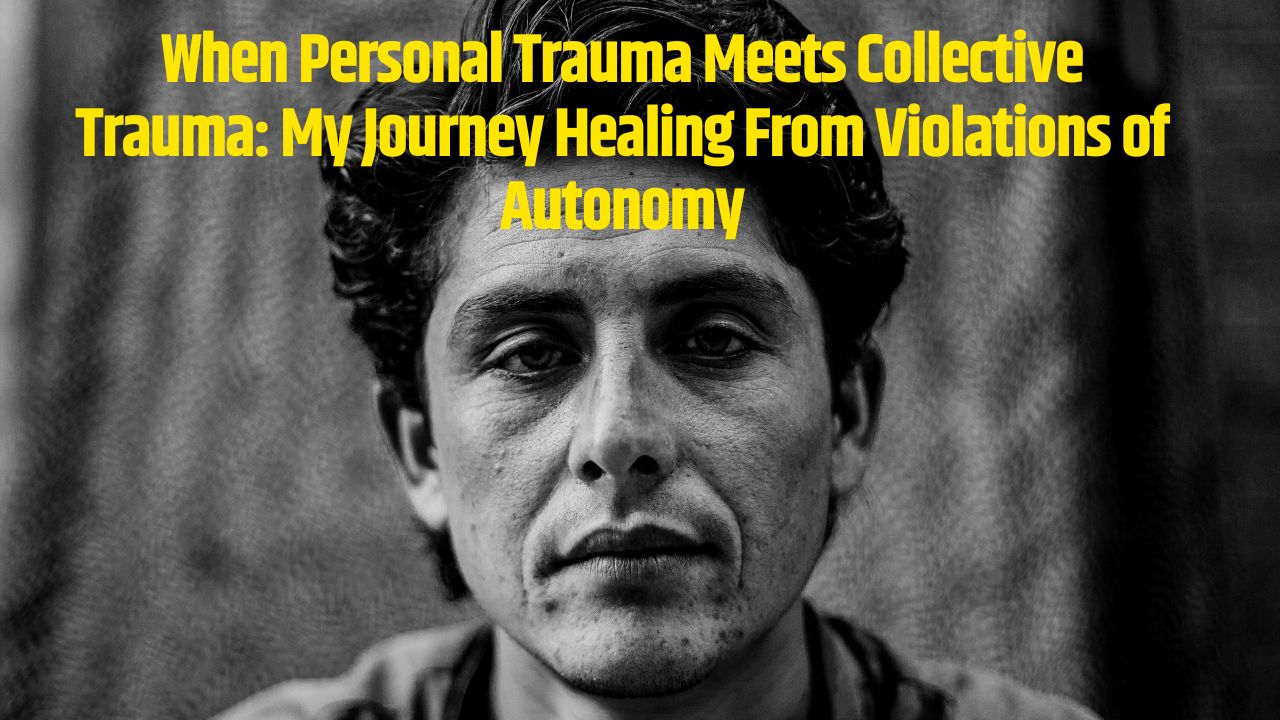
There are moments when something happens in the world that affects us far more deeply than we expect.
Perhaps you read a story about someone being sexually assaulted. Maybe you hear another debate about bodily autonomy, women's safety, or consent. Perhaps you watch a news story about abuse, exploitation, or injustice and suddenly find yourself overwhelmed with sadness, anger, grief, exhaustion, or even hopelessness.
If you've ever wondered, Why is this affecting me so much? you're not alone.
As both a licensed therapist and someone who has spent decades healing from my own complex childhood trauma, I have learned that our responses to these moments are rarely just about the news itself.
Sometimes they are about what our nervous system remembers.
Trauma Doesn't Stay in the Past
One of the greatest misunderstandings about trauma is the belief that once the event is over, the impact should disappear.
But trauma doesn't simply live in our memories.
It lives in our nervous system.
Our bodies remember experiences long after our minds have tried to move on. They remember moments when we felt powerless, unsafe, violated, unseen, or unable to protect ourselves.
This is one of the reasons seemingly unrelated events can trigger such powerful emotional responses.
A news headline isn't just a headline.
A political debate isn't always just politics.
A conversation about consent isn't always theoretical.
Sometimes our nervous system recognizes familiar patterns before our conscious mind even realizes why we are reacting.
The body quietly says,
"I've been here before."
My Own Journey
For much of my life, I didn't fully understand the impact my childhood experiences had on me.
Growing up, my body, my boundaries, and my sense of safety were not always respected.
Like many survivors of developmental trauma, I became exceptionally skilled at understanding everyone else.
I became good at explaining why people behaved the way they did.
I became good at maintaining relationships.
I became good at anticipating other people's needs.
I became good at taking responsibility for everyone else's emotions.
What I didn't become very good at was recognizing my own.
For years I believed these patterns were simply my personality.
I thought I was naturally accommodating.
Naturally understanding.
Naturally self-sacrificing.
Healing eventually taught me something very different.
Many of these behaviors weren't personality traits.
They were survival strategies.
Survival Responses Are Intelligent
One of the most compassionate shifts trauma healing offers is replacing the question:
"What's wrong with me?"
with
"What happened to me that made this adaptation necessary?"
Trauma psychology teaches us that our nervous systems are designed to protect us.
When danger feels inescapable, our bodies automatically choose whichever response offers the greatest chance of survival.
Many people know about fight or flight.
Fewer understand freeze.
Even fewer understand fawn.
The fawn response often looks like:
- People pleasing
- Difficulty saying no
- Prioritizing other people's emotions
- Avoiding conflict
- Becoming hyper-attuned to others
- Disconnecting from personal needs
- Feeling responsible for maintaining relationships at any cost
None of these responses mean someone is weak.
They often represent a brilliant nervous system doing exactly what it learned it needed to do to survive.
Understanding Harm Doesn't Mean Excusing Harm
As I've healed, one realization has become increasingly important.
It is absolutely possible to understand why someone caused harm without minimizing the impact of that harm.
Compassion and accountability are not opposites.
Understanding that someone acted from trauma does not require us to ignore the pain they caused.
As a therapist, I often remind clients that two truths can exist simultaneously.
Someone may have experienced tremendous suffering.
And...
They may also have deeply harmed another person.
Holding compassion for both realities doesn't erase responsibility.
In fact, genuine accountability often requires us to understand the full picture.
When Boundaries Were Never Fully Yours
Throughout my own life, I experienced numerous situations where men pressured me sexually, ignored my hesitation, or dismissed my discomfort.
At the time, I often didn't recognize what was happening.
I assumed I was being difficult.
Too sensitive.
Not loving enough.
I thought maybe I should simply make the other person happy.
Looking back, I can now see how childhood trauma shaped those responses.
When children learn early that their boundaries don't matter, their nervous systems often become organized around preserving connection rather than protecting themselves.
This isn't because survivors don't have boundaries.
It's because their nervous systems learned that honoring those boundaries might not be safe.
Many survivors later ask themselves painful questions.
"Why didn't I stop it?"
"Why didn't I say no?"
"Why did I go along with it?"
Trauma-informed healing helps us understand that these questions often come from shame rather than truth.
Our nervous systems weren't failing.
They were protecting us in the only ways they knew how.
When Personal Trauma Meets Collective Trauma
One of the most difficult parts of healing is realizing that our personal experiences don't exist in isolation.
They unfold inside larger cultural systems.
Many women have grown up receiving messages that being agreeable matters more than being authentic.
That maintaining harmony matters more than honoring discomfort.
That other people's needs deserve more attention than their own.
These messages don't simply shape beliefs.
They shape nervous systems.
When current conversations about consent, bodily autonomy, or violence arise, many survivors aren't simply reacting to the issue itself.
They're reacting to decades of accumulated experiences.
The grief isn't only personal.
It's collective.
Healing Doesn't Mean You Stop Caring
One of the biggest myths about healing is that eventually you become unaffected by suffering.
I don't believe that's true.
Healing hasn't made me stop grieving.
It hasn't made injustice feel acceptable.
It hasn't removed my anger when I witness harm.
Instead, healing has changed my relationship with those emotions.
Today I understand that anger often carries important information.
It tells us something matters.
Something feels unjust.
Something deserves attention.
Healing isn't learning not to feel.
Healing is learning how to feel without becoming consumed.
The Nervous System Needs Compassion Too
One lesson I've learned over the past twenty-five years is that healing isn't only about changing our thoughts.
It's also about caring for our biology.
Our nervous systems need rest.
Connection.
Safety.
Gentleness.
Many trauma survivors become incredibly compassionate toward everyone except themselves.
We understand everyone else's pain.
Yet struggle to extend that same understanding inward.
Eventually I realized something.
If I continually abandon myself while trying to care for everyone else...
I am recreating the very wound I am trying to heal.
Healing Is Also Relational
We often imagine healing as an individual journey.
Meditation.
Therapy.
Books.
Journaling.
These are all valuable.
But healing also happens in relationships.
In communities.
In cultures that begin respecting boundaries.
Listening to survivors.
Teaching healthy consent.
Holding people accountable.
Supporting nervous system safety.
Personal healing matters.
Collective healing matters too.
The healthier our relationships become, the safer future generations become.
A Different Vision of Strength
For years I believed strength meant enduring.
Today I believe strength looks different.
Strength is recognizing your body's signals.
Strength is honoring your limits.
Strength is allowing your "no" to matter.
Strength is staying compassionate without abandoning yourself.
Strength is understanding another person's humanity while refusing to excuse harmful behavior.
Strength is choosing relationships where your body feels safe enough to be fully present.
Returning Home to Yourself
Perhaps the deepest lesson trauma has taught me is this:
Healing isn't becoming someone different.
Healing is becoming someone you no longer have to abandon.
It is remembering that your body belongs to you.
Your emotions matter.
Your boundaries matter.
Your voice matters.
Your nervous system deserves compassion.
And perhaps, collectively, healing asks something even bigger of all of us.
Not simply helping survivors recover from harm.
But creating a world where fewer people have to spend decades recovering from wounds that never should have happened.
An Invitation
If these reflections resonate with you, I hope you'll spend a few moments becoming curious about your own nervous system.
What experiences shaped the way you relate to yourself?
Where did you learn that your needs mattered—or didn't?
How might your survival strategies have helped you endure what once felt unbearable?
Healing doesn't begin by criticizing those protective parts.
It begins by understanding them with compassion.
If you'd like to explore these ideas more deeply, I invite you to read my book, The Divine Within: Healing Ourselves to Heal the World, where I integrate trauma psychology, neuroscience, contemplative spirituality, and embodied healing into a compassionate framework for personal and relational transformation.
If you're looking for more personalized support, you can also learn about working with me as a therapist, wellness coach, or spiritual mentor at BlossomingHeartWellness.com.
I help people integrate spiritual awakening, emotional depth, and relational healing into grounded, embodied living so they can feel more connected to themselves and others.
You are not broken.
Your nervous system has been doing its best to protect you.
And healing begins the moment you stop fighting yourself and start listening with compassion.
About The Author
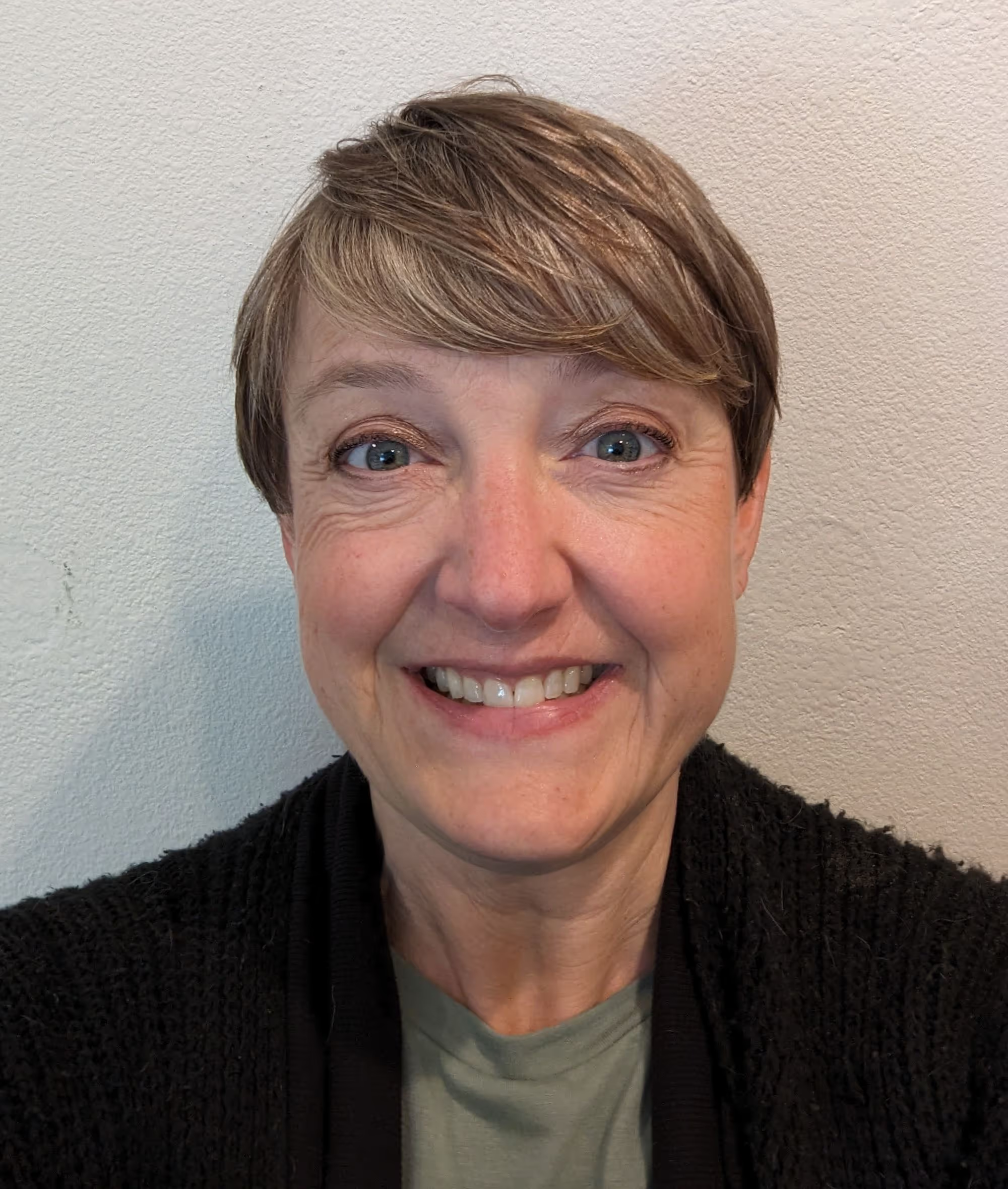
Allison Batty-Capps is a consciousness catalyst, spiritual teacher, and transmitter of Divine Human embodiment. She is a licensed mental health therapist, Reiki Master, Yoga Coach and spiritual channeler. She works at the intersection of psychology, mysticism, shadow alchemy, and God-consciousness, offering teachings that unify the human and the divine.
Her work is not about healing people — it is about awakening them.
Her presence carries a frequency that reminds others of their inherent sovereignty, their inner wisdom, and their direct connection to the Divine.
Through her books, teachings, sessions, and transmissions, Allison guides people into the maturity of spiritual adulthood — where compassion meets boundaries, love meets truth, and the soul meets the body.
She is devoted to helping humanity evolve beyond fear, beyond hierarchy, and beyond old paradigms of spirituality into a new era of embodied consciousness.
Allison lives what she teaches.
Her life reveals what unfolds when a person remembers they are not alone or separate, but a wave formed from the infinite ocean of God’s consciousness.
Join the Community!
Receive wellness tips, resources, book updates, and more directly in your inbox!
Related Posts
When a Spiritual Experience Feels Profoundly Real

I’m Done Confusing Silence With Healing