Why “You Chose This” Is Not Trauma-Informed Spirituality
.png)
When Spiritual Language Hurts Instead of Heals
Many people have encountered the spiritual idea that Earth is a school—a place where souls come to learn lessons, grow, and evolve. Often embedded within this belief is another idea: that we choose our experiences, including our families, our struggles, and sometimes even our suffering.
For some, this framework feels comforting. It offers a sense of order in a chaotic world. It can help people believe that pain has meaning and that nothing is random.
But for many trauma survivors, this language does not feel comforting at all.
Instead, phrases like “you chose this,” “your soul planned this,” or “this happened for your growth” can land as deeply painful, confusing, and even retraumatizing. When spoken without trauma-informed care, these ideas can unintentionally blame survivors for harm that was done to them—and that matters.
This blog is the foundation of a 15-episode series titled:
Healing, Not Blame: A Trauma-Informed View of Soul, Family, and Awakening
In this first installment, I want to explore why the idea that “you chose this” is not trauma-informed spirituality, and how we can approach spirituality in a way that supports healing, agency, and nervous system safety rather than shame or bypassing.
A Grounding Invitation Before We Begin
Before moving forward, I want to invite you to pause for a moment.
Take a gentle breath.
Notice where your body is supported.
Observe any sensations—without trying to change them.
Remind yourself: In this moment, you are here, and you are safe.
Your body’s responses matter. Throughout this blog, I invite you to listen not just with your mind, but with your nervous system.
When the Body Contracts, It’s Indicating a Wound
If you’ve ever heard spiritual teachings about choosing your suffering and noticed:
- Tightness in your chest
- A sense of shrinking or freezing
- Confusion, shame, or self-blame
- A quiet feeling inside, like something shut down
I want you to know this: your body was communicating something important.
If a message were truly aligned with wisdom, compassion, and safety, the body would tend to feel more open, supported, warm, or held. Persistent contraction is often a signal—not that you are resistant or “unawakened,” but that something about the message is not sitting right and may need deeper examination.
A Trauma-Informed Disclaimer
What I share comes from my lived experience, professional training, and integrative work as a:
- Licensed Marriage and Family Therapist
- Trauma-informed clinician
- Reiki Master
- Yoga and embodiment coach
- Spiritual explorer grounded in psychology and neuroscience
Nothing here is offered as absolute truth or spiritual dogma. This content is not medical or psychiatric advice, nor a replacement for therapy or professional care.
I encourage you to take what resonates and leave what doesn’t. You are the authority of your own experience.
If at any point you feel fear, urgency, grandiosity, distress, or pressure—those are cues to pause, ground, and seek support, not to push through.
Naming This Clearly: Trauma-Informed Spirituality Does Not Teach That You Chose Harm
I want to say this plainly and unequivocally:
No trauma-informed spiritual framework teaches that a person chose abuse, violence, neglect, or harm.
Not a child.
Not an adult.
Not a soul.
When spirituality suggests that someone chose their trauma, even unintentionally, it shifts responsibility away from those who caused harm and places it onto the person who was harmed.
That is not wisdom.
That is not love.
That is not awakening.
Meaning Is Not the Same as Blame
This distinction is critical.
Yes—meaning can emerge from lived experiences, including painful ones. Humans are meaning-making beings, and healing often includes integrating what we’ve been through.
But meaning does not equal responsibility.
Finding meaning in survival or healing does not mean the harm was justified, chosen, or required. Trauma-informed spirituality holds this distinction with care and clarity.
What Trauma Actually Is: A Nervous System Perspective
Trauma, from a psychological and neuroscientific standpoint, is defined by:
- Loss of choice
- Loss of agency
- Loss of safety
Especially in childhood, the nervous system does not experience trauma as a “lesson.” It experiences it as overwhelm.
The brain shifts into survival mode.
The body braces.
The self fragments in order to endure.
There is no choosing happening in those moments.
So when trauma is reframed as a chosen soul lesson, it can feel like the harm itself is being spiritualized—and for survivors, this often feels like abandonment all over again.
Why the “Earth Is a School” Narrative Became Popular
This belief often comes from a deeply human place:
- A desire to believe suffering has meaning
- A desire for order instead of randomness
- A wish to feel safe from cruelty
For people who have not experienced severe trauma, this framework can feel comforting. But comfort does not automatically equal truth—especially when it comes at the cost of compassion for those who have suffered.
Spirituality is not meant to explain away pain.
It is meant to help us stay present with it—without blame or shame.
A Trauma-Informed Reframe: What Choosing Really Might Mean
A trauma-informed spiritual lens offers something very different.
It may be true that we are born into families, cultures, and systems that carry unresolved trauma. Trauma moves through lineages via nervous systems, attachment patterns, and survival strategies.
But being born into a family system does not mean consenting to harm within it.
Awakening is not about accepting pain as destiny.
It is about interrupting cycles and restoring choice.
Earth Is Not a Classroom of Punishment
When people say “Earth is a school,” it is often heard as:
- Endure suffering
- Pass the test
- Prove your worth
A trauma-informed reframe sounds more like this:
Earth is a place where duality exists, including unhealed wounds that can create harm—and where healing restores agency, connection, and choice.
Suffering is not the lesson.
Violence is not the teacher.
Pain is not required for consciousness.
Healing is where wisdom emerges.
A Message Directly to Survivors
If you experienced trauma—especially abuse or violence—please hear this:
You did not choose what happened to you.
Your soul is not being punished.
You are not behind.
You are not failing at spirituality.
You are not “low vibration.”
Your survival speaks to resilience—not to a lesson you signed up for.
Healing is not weakness. Questioning is not failure. Both are acts of courage.
Where Responsibility Truly Belongs
Trauma-informed spirituality does not ask, “Why did this happen to you?”
It asks:
- How do we stop this from happening again?
- How do we protect the vulnerable?
- How do we heal systems that allow harm?
Responsibility belongs with:
- Those who caused harm
- Systems that enabled it
- Cultures that normalized it
Healing belongs with the survivor—not as an obligation, but as a reclamation of self.
What This Series Will Explore
In this series, we will explore:
- Earth as a place of growth without glorifying suffering
- Intergenerational trauma without blaming children
- The idea of choosing parents without bypassing harm
- Awakening as integration, not transcendence
- Healing as the highest spiritual act
This is not a series about blame or shame.
It is a series about truth with compassion.
Discernment, Support, and Integration
Mystical experiences, symbolic dreams, and spiritual insights are deeply personal. They unfold best with grounding, time, and often trauma-informed professional or community support.
True spiritual growth does not disconnect us from reality—it helps us inhabit our bodies and lives more fully.
I do not offer personal spiritual interpretations through comments or messages. If you are navigating intense emotional or spiritual experiences, I encourage seeking trauma-informed professional care.
Resources for Deeper Support
If my work resonates with you, you may explore:
- Mentorship and healing support:
👉 www.blossomingheartwellness.com - My book:
The Divine Within: Healing Ourselves to Heal the World
Both are offered as supportive resources—not as answers, but as companions on your journey.
Closing
Thank you for being here.
Thank you for honoring your nervous system.
Thank you for choosing a path rooted in compassion, discernment, and embodied truth.
Take gentle care of yourself.
You are deeply loved.
About The Author
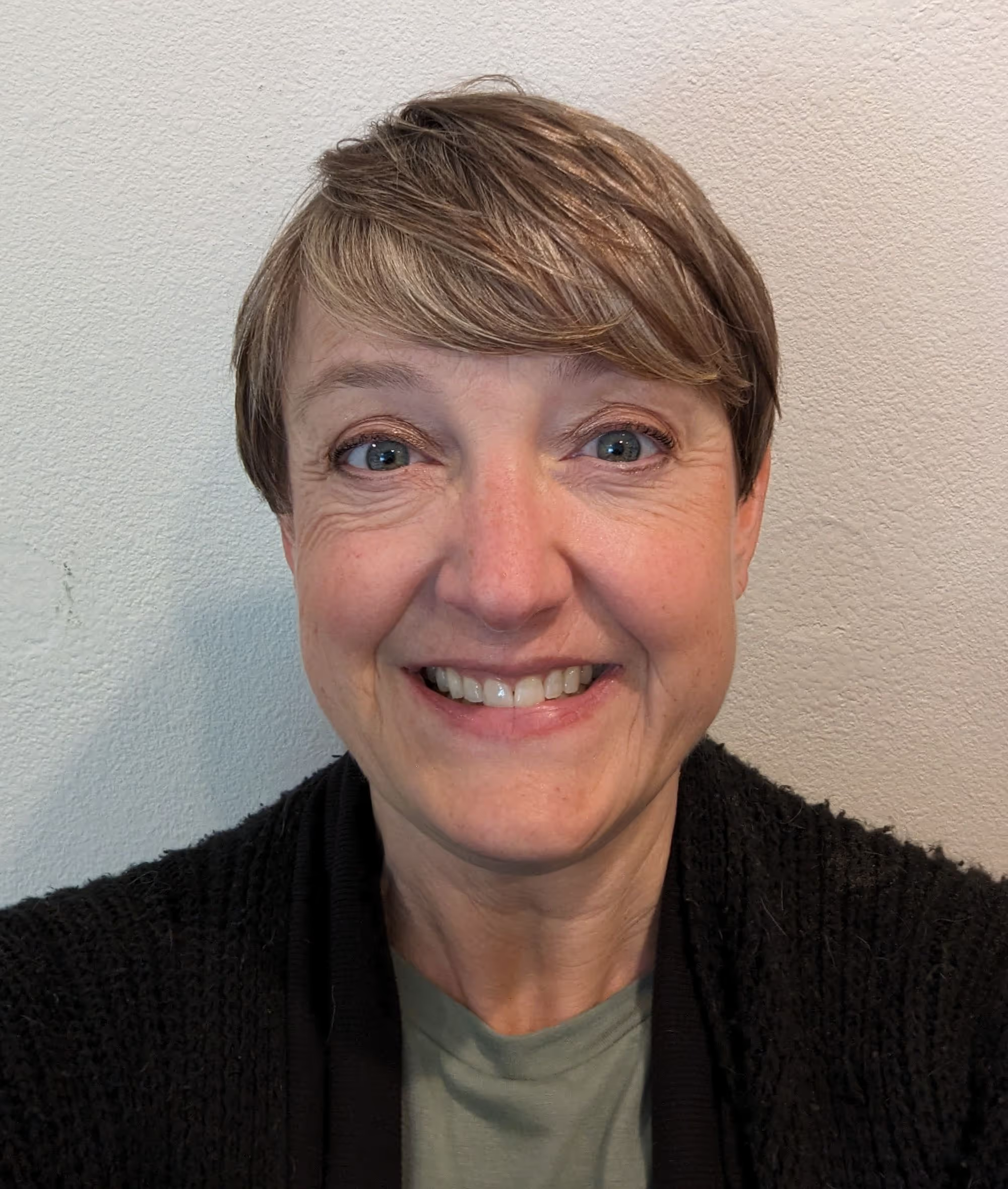
Allison Batty-Capps is a consciousness catalyst, spiritual teacher, and transmitter of Divine Human embodiment. She is a licensed mental health therapist, Reiki Master, Yoga Coach and spiritual channeler. She works at the intersection of psychology, mysticism, shadow alchemy, and God-consciousness, offering teachings that unify the human and the divine.
Her work is not about healing people — it is about awakening them.
Her presence carries a frequency that reminds others of their inherent sovereignty, their inner wisdom, and their direct connection to the Divine.
Through her books, teachings, sessions, and transmissions, Allison guides people into the maturity of spiritual adulthood — where compassion meets boundaries, love meets truth, and the soul meets the body.
She is devoted to helping humanity evolve beyond fear, beyond hierarchy, and beyond old paradigms of spirituality into a new era of embodied consciousness.
Allison lives what she teaches.
Her life reveals what unfolds when a person remembers they are not alone or separate, but a wave formed from the infinite ocean of God’s consciousness.
Join the Community!
Receive wellness tips, resources, book updates, and more directly in your inbox!
Related Posts

If You Love Your Work, Why Would You Ever Want to Stop?
.jpg)
The Harmful Myth of “Poor Mindset”