When Willpower Becomes Violence
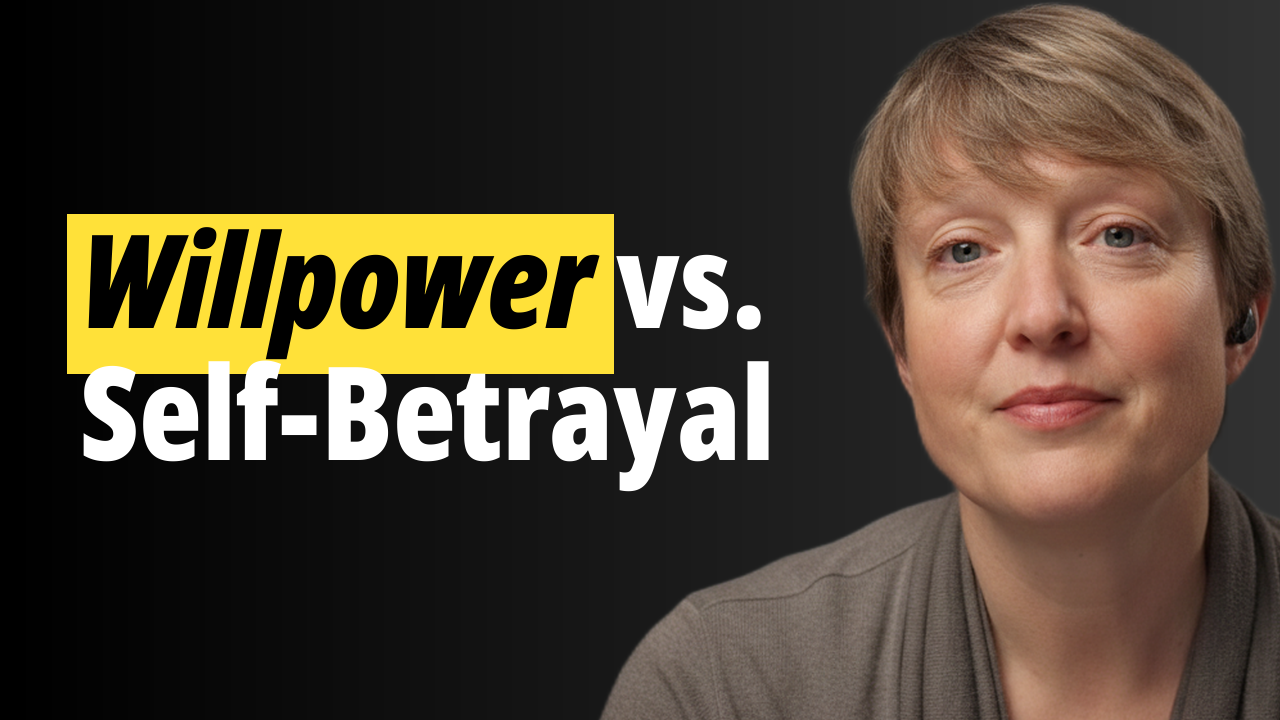
For decades, motivation has been framed as a moral virtue.
If you can push through, you’re strong.
If you can override discomfort, you’re disciplined.
If you can keep going despite exhaustion, fear, or pain, you’re successful.
And if you can’t?
You’re often told you’re lazy, resistant, self-sabotaging, unhealed, or lacking willpower.
From a trauma-informed and neuroscientific perspective, this framework is not only inaccurate—it can be actively harmful.
This article explores a different paradigm: what happens when willpower becomes a form of violence against the nervous system, and how healing, motivation, and meaningful change actually arise from safety, not force.
The Cultural Myth of Willpower
Modern self-help, productivity culture, and even some spiritual teachings promote a singular message:
“Just do it.”
This framing assumes that human behavior is primarily driven by conscious choice and mindset. If you aren’t acting, it must be because you are choosing not to.
But neuroscience tells a very different story.
Much of our behavior is not governed by conscious decision-making at all. It is governed by the nervous system’s perception of safety or threat.
When the nervous system detects danger—real or remembered—it does not ask for permission from the conscious mind. It responds automatically.
This is not weakness.
This is biology.
Resistance Is Not Laziness—It Is Communication
From a trauma-informed lens, resistance is never random.
Resistance may show up as:
- Procrastination
- Avoidance
- Overwhelm
- Numbness
- Shutdown
- Dissociation
- Distraction
- “I can’t make myself do it”
These are not character flaws. They are protective responses.
The nervous system is constantly scanning for safety through a process called neuroception—a subconscious evaluation of whether something feels safe, dangerous, or overwhelming.
If an action, environment, expectation, or relationship triggers a sense of threat—especially if it echoes past trauma—the body may initiate a survival response even if the conscious mind believes the task is “safe” or “important.”
Procrastination as a Trauma Response
Procrastination is often mislabeled as a lack of discipline. In reality, it is frequently associated with the freeze response.
Neuroscientifically, freeze occurs when:
- Fight feels unsafe or impossible
- Flight feels unavailable
- The system becomes immobilized to conserve energy and reduce perceived risk
Procrastination may be linked to:
- Fear of judgment or visibility
- Trauma memories associated with pressure, punishment, or humiliation
- A nervous system that learned rest was unsafe
- Overwhelm from cognitive or emotional load
- Unmet needs that require care before action is possible
When someone says, “I can’t make myself do it,” what they are often saying is:
“Something in me does not feel safe enough yet.”
Forcing action at this point does not heal the root cause. It often deepens it.
When Pushing Through Becomes Self-Betrayal
Here is where the conversation becomes uncomfortable—but essential.
When we override resistance without curiosity or care, we teach ourselves a dangerous lesson:
My body’s signals don’t matter.
This is what I refer to as self-betrayal.
From a trauma perspective, pushing through can mirror earlier experiences of:
- Being ignored
- Being pressured
- Being forced
- Being valued for performance rather than humanity
- Having boundaries dismissed
For trauma survivors especially, “discipline” can unconsciously recreate the very dynamics that caused harm in the first place.
When self-help advice glorifies overriding exhaustion, fear, or distress, it can unintentionally reinforce patterns of self-abandonment.
Healing cannot be built on coercion—even when that coercion comes from ourselves.
The Neuroscience of Safety and Action
True motivation emerges from the ventral vagal state of the nervous system—the state associated with safety, connection, curiosity, and engagement.
In this state:
- The prefrontal cortex comes online
- We have access to executive functioning
- Creativity, problem-solving, and flexibility increase
- Action feels possible, not forced
In contrast:
- When the nervous system is in fight, flight, or freeze
- The body prioritizes survival over productivity
- Rational planning becomes impaired
- Pushing harder increases dysregulation, not results
This is why forcing action often leads to burnout, collapse, or cycles of motivation followed by shutdown.
The body eventually demands to be listened to.
A Trauma-Informed Reframe: Resistance as an Invitation
Here is the reframe that changes everything:
Resistance is not an obstacle to healing.
Resistance is a doorway to healing.
Instead of asking:
“How do I make myself do this?”
We can ask:
“What is my nervous system protecting me from right now?”
This question invites:
- Curiosity instead of judgment
- Regulation instead of force
- Compassion instead of shame
From here, we can:
- Tend to unmet needs
- Slow down enough to restore safety
- Rebuild trust with the body
- Allow action to arise organically
Movement often returns naturally—not because we pushed, but because we listened.
Trauma-Informed Care vs. Willpower Culture
Trauma-informed care recognizes that:
- Healing is non-linear
- Safety precedes growth
- The body holds memory
- Regulation must come before activation
This stands in direct contrast to systems that reward:
- Overwork
- Emotional suppression
- Dissociation framed as resilience
- Productivity at the cost of health
When we apply willpower culture to healing, leadership, parenting, education, or social change, we unintentionally perpetuate harm.
Sustainable transformation—personal or collective—requires nervous system safety.
Healing Is Both Personal and Collective
This conversation is not about blaming individuals or shaming past approaches.
Many of us were taught these frameworks because they were normalized in families, schools, workplaces, and spiritual communities.
But as our understanding of trauma and neuroscience deepens, we are invited to evolve.
When individuals learn to honor their nervous systems:
- Burnout decreases
- Compassion increases
- Boundaries strengthen
- Agency returns
And when enough individuals do this, systems begin to change.
This is how we move toward healthier models of leadership, education, healing, and social sustainability.
A Gentle Reminder
Healing, spiritual insight, and inner growth are deeply personal processes. They are best approached slowly, with grounding, and often with trauma-informed professional or community support.
Nothing shared here is meant to diagnose, replace therapy, medical care, or your own discernment.
True healing does not disconnect us from our bodies or our humanity.
It helps us inhabit life more fully.
Continuing the Journey
If this teaching resonates, I explore these themes more deeply through:
- Trauma-informed mentorship
- Online courses
- And my book, The Divine Within: Healing Ourselves to Heal the World
The book offers practical tools for:
- Nervous system regulation
- Identifying trauma patterns
- Reparenting and boundary development
- Healing without self-abandonment
You can learn more at www.blossomingheartwellness.com, or find the book through Amazon, Barnes & Noble, Powell’s Books, Walmart, and other online platforms.
Thank you for honoring your nervous system, your agency, and your humanity.
May your healing be gentle, grounded, and led by safety—not force.
About The Author
Allison Batty-Capps is a consciousness catalyst, spiritual teacher, and transmitter of Divine Human embodiment. She is a licensed mental health therapist, Reiki Master, Yoga Coach and spiritual channeler. She works at the intersection of psychology, mysticism, shadow alchemy, and God-consciousness, offering teachings that unify the human and the divine.
Her work is not about healing people — it is about awakening them.
Her presence carries a frequency that reminds others of their inherent sovereignty, their inner wisdom, and their direct connection to the Divine.
Through her books, teachings, sessions, and transmissions, Allison guides people into the maturity of spiritual adulthood — where compassion meets boundaries, love meets truth, and the soul meets the body.
She is devoted to helping humanity evolve beyond fear, beyond hierarchy, and beyond old paradigms of spirituality into a new era of embodied consciousness.
Allison lives what she teaches.
Her life reveals what unfolds when a person remembers they are not alone or separate, but a wave formed from the infinite ocean of God’s consciousness.
Join the Community!
Receive wellness tips, resources, book updates, and more directly in your inbox!
Related Posts
Rupture and Repair
When the World Reopens Old Wounds
.jpg)