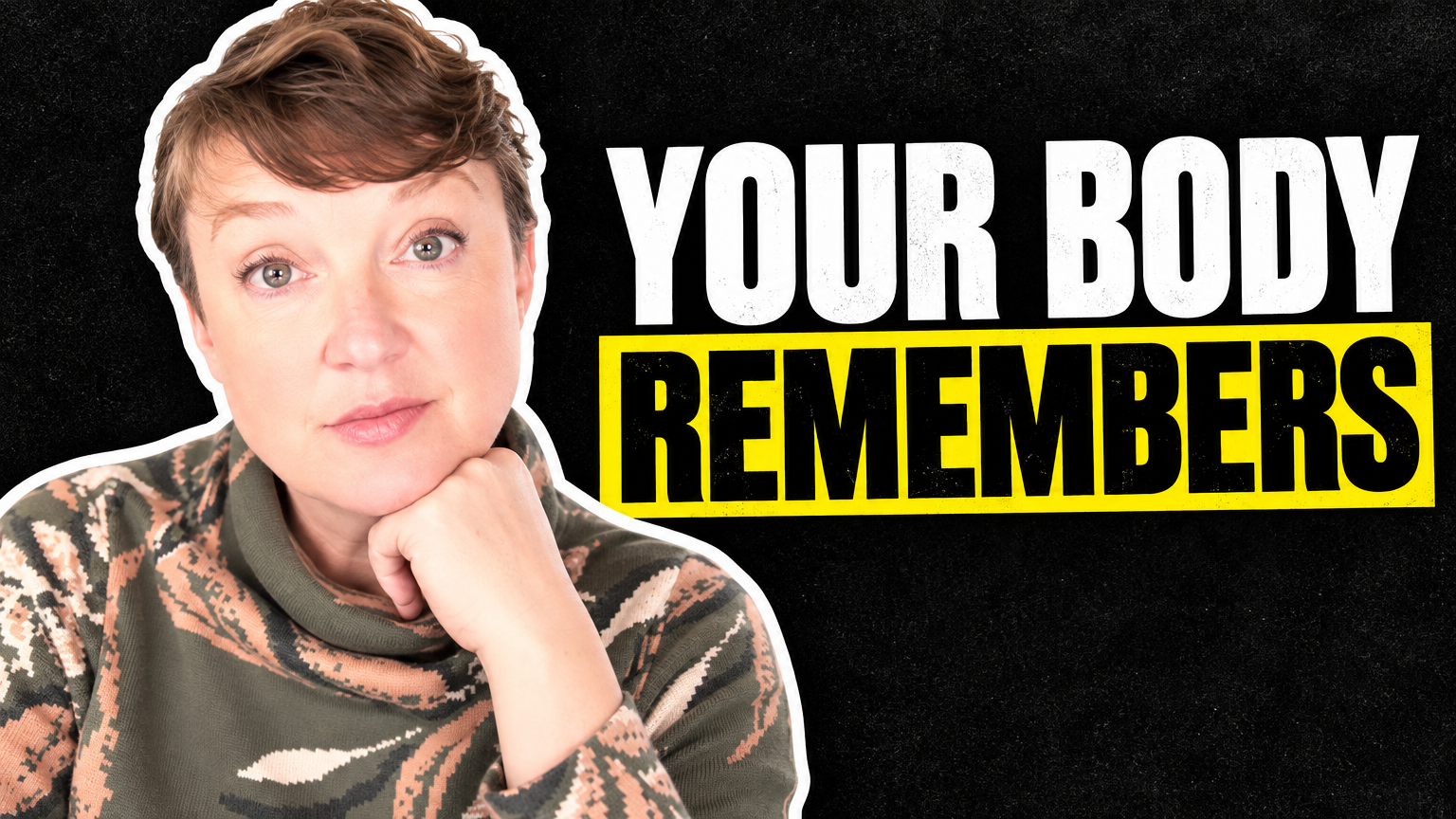
When the Body Remembers
By Allison Batty-Capps, MA
What if some of the health challenges we face in adulthood are connected to experiences our bodies endured long before we received a diagnosis? Understanding the relationship between childhood trauma, the nervous system, and physical health invites us to approach healing with greater compassion, curiosity, and care.
When Your Body Feels Like It's Fighting You
Have you ever felt as though your own body were working against you? Perhaps you've visited multiple doctors, tried different treatments, and spent years searching for answers, only to find yourself still struggling with symptoms that affect nearly every aspect of your life.
When we live with chronic illness, autoimmune conditions, or significant mental health challenges, it can be exhausting to navigate the uncertainty. We want answers. We want relief. And we want someone to recognize the full extent of what we're experiencing.
Modern medicine has made extraordinary advances in understanding the biological processes involved in illness. Yet an important dimension of health deserves continued attention: the relationship between our early experiences, our stress-response systems, and our physical wellbeing.
Research increasingly demonstrates that adverse childhood experiences can be associated with long-term effects on both physical and mental health. These experiences may influence stress regulation, immune function, emotional wellbeing, and vulnerability to certain health conditions later in life.
This doesn't mean that every chronic illness originates in trauma or that we can determine the cause of an individual's condition from their personal history. It means that our experiences are relevant to our health—and that understanding the whole person can help us approach healing more compassionately.
How Childhood Trauma Can Affect the Body
Childhood is a period of extraordinary development. During these years, the brain, nervous system, and other biological systems are adapting to the environment in which a child lives.
When a child experiences prolonged fear, abuse, neglect, or instability, their stress-response systems may repeatedly activate in an effort to protect them.
The body's stress response is essential for survival. It helps us mobilize energy, respond to danger, and return to a state of relative calm when a threat has passed.
However, persistent or repeated stress can affect the systems responsible for regulating that response. Research suggests that adverse childhood experiences may influence stress hormones, immune and inflammatory processes, sleep, and other aspects of physiological functioning.
Over time, these changes may contribute to increased vulnerability to certain physical and mental health conditions.
The relationship is complex. Genetics, environment, access to healthcare, social support, subsequent experiences, and many other factors also influence health outcomes.
Nevertheless, these findings invite us to consider an important possibility: experiences that occurred decades ago may still be relevant to how someone feels and functions today.
The body does not remember the past in quite the same way the mind remembers a story. Rather, experiences can shape learned responses, stress regulation, emotional patterns, and physiological processes that persist long after the original circumstances have changed.
Understanding this distinction helps us appreciate the lasting effects of trauma without assuming that illness is inevitable or that every symptom has a single underlying cause.
The Personal Reality of Living With Trauma and Chronic Illness
For me, this subject is more than an area of professional interest. It is also part of my lived experience.
As a survivor of childhood sexual abuse, I've come to understand how deeply early experiences can affect our sense of safety and our relationship with ourselves and the world around us.
My own journey has included significant mental health challenges and mast cell activation syndrome (MCAS), a condition involving the inappropriate activation of mast cells and the release of mediators that can cause symptoms across multiple body systems.
I cannot attribute every aspect of my health to my trauma history, and I would never suggest that someone else's illness must have the same explanation. But I recognize in my own experience how difficult it can be to navigate physical symptoms alongside the effects of prolonged stress and emotional suffering.
Living with chronic symptoms can require enormous amounts of time, energy, and financial resources. There are appointments to attend, treatments to explore, and daily decisions about how to manage limited energy.
When these challenges exist alongside a history of trauma, the burden can feel especially heavy.
Survivors may already be working to rebuild a sense of safety, trust, and connection. Adding persistent physical symptoms to that process can make everyday life feel overwhelming.
If this is part of your experience, I want you to know something important: your illness is not a personal failure, and you are not to blame for what happened to you.
You deserve compassionate medical care, appropriate treatment, and support that recognizes the complexity of your experience.
You do not have to prove that trauma caused your illness to deserve that care.
From Symptom Management to Whole-Person Healthcare
Medical treatment is essential. Diagnosing a condition accurately, investigating symptoms, and offering appropriate medication or other interventions can make an enormous difference in someone's quality of life.
At the same time, healthcare can benefit from considering more than the symptoms that bring a patient into the examination room.
The landmark Adverse Childhood Experiences (ACE) Study, conducted through a collaboration between Kaiser Permanente and the U.S. Centers for Disease Control and Prevention, helped bring attention to associations between childhood adversity and health risks later in life.
Subsequent research has expanded our understanding of how early adversity can be associated with physical health, mental health, and social outcomes.
These findings support the importance of trauma-informed care: an approach that recognizes the potential effects of trauma, prioritizes emotional and physical safety, and avoids practices that unnecessarily recreate feelings of helplessness or loss of control.
A trauma-informed approach does not mean assuming that every patient has experienced trauma. Nor does it mean replacing medical investigation with psychological explanations.
Instead, it invites healthcare professionals to consider the whole person.
Could chronic stress be affecting this person's sleep or symptoms? Would psychological support be helpful alongside medical treatment? Does the patient feel safe, respected, and involved in decisions about their care? Are financial pressures, social isolation, or ongoing adversity making recovery more difficult?
These questions can complement conventional medical care rather than compete with it.
We also need to recognize the importance of prevention. Supporting children, protecting them from abuse, responding to disclosures with care, and ensuring access to safe and stable environments may help reduce the long-term consequences of adversity.
If we want healthier communities, we must care about the conditions in which people grow, live, and recover—not only the illnesses they develop.
Healing Through the Connection Between Mind, Body, and Spirit
For me, meaningful healing involves learning to understand ourselves with greater compassion while remaining grounded in what we know about the body and the nervous system.
This is one reason I value integrative approaches that bring together appropriate healthcare, emotional awareness, nervous system regulation, mindfulness, and embodied practices.
Depending on an individual's needs and circumstances, helpful supports may include psychotherapy, gentle movement, breathing practices, meditation, restorative routines, supportive relationships, and medical treatment.
These practices are not guaranteed cures for chronic illness, and they should never be presented as substitutes for necessary medical care. Their value lies in offering additional ways to support wellbeing, develop coping skills, and cultivate a greater sense of agency.
For some survivors, healing also involves gradually learning to recognize the difference between present circumstances and past experiences.
A situation that feels threatening may activate familiar emotional or physiological responses, even when the current circumstances differ from the original experience. With appropriate support, some people can develop greater awareness of these responses and discover new ways of relating to them.
This process should happen at a pace that respects each person's needs, boundaries, and capacity. Healing is not about forcing the body to relax, demanding forgiveness, or insisting that someone find a positive meaning in what happened to them.
It is about creating conditions in which safety, choice, and connection can become more available.
And it is important to remember that not every survivor experiences trauma in the same way. There is no single path to recovery, and no one should feel pressured to revisit painful memories to deserve support.
From Personal Healing to Collective Healing
Our relationship with health is shaped by more than individual choices. It is also influenced by the environments we create for one another.
When children are protected, survivors are believed and supported, and people have access to compassionate healthcare, we create better conditions for individual and collective wellbeing.
When suffering is dismissed, abuse is concealed, or people are left to navigate complex health challenges without adequate support, the consequences can extend beyond the individual.
This is where personal healing and social responsibility meet.
We cannot change the past, and we cannot prevent every illness. But we can become more attentive to the ways trauma affects people's lives. We can support evidence-informed prevention, strengthen access to care, and create relationships and communities where people are treated with dignity.
We can also move away from the assumption that struggling means someone has failed.
Sometimes, what looks like dysfunction is a person trying to cope with circumstances that have exceeded their resources. Sometimes, what appears to be a lack of resilience is exhaustion from carrying too much for too long.
Compassion allows us to become curious about those experiences without making assumptions about someone's story.
For me, this is part of the deeper work of healing: learning to recognize our shared humanity while respecting each person's individual experience.
Your Body Deserves Compassion, Not Blame
If you are living with chronic illness, the effects of childhood trauma, or both, you deserve care that takes your experience seriously.
You deserve medical professionals who listen to your symptoms and investigate them appropriately. You deserve support for the emotional effects of living with illness. And you deserve an approach to wellbeing that recognizes you as a whole person rather than reducing you to a diagnosis.
You do not have to identify a trauma history to explain your symptoms. You do not have to resolve every painful experience before your health can improve. And you do not have to navigate the journey alone.
My work through Blossoming Heart Wellness brings together my background in counseling, my interest in the relationship between psychology and spirituality, and my commitment to grounded, compassionate healing.
Through integrative wellness coaching and spiritual mentorship, I support people who want to deepen their self-understanding, cultivate greater emotional awareness, and explore practices that support embodied living. This work is intended to complement, not replace, appropriate medical and mental health care.
My book, The Divine Within: Healing Ourselves to Heal the World, explores the relationship between inner healing, spiritual awareness, and our shared responsibility to create a more compassionate world.
If you would like to explore these themes further, I invite you to visit blossomingheartwellness.com to learn more about my work and available resources.
Your body has carried you through your life, including experiences you may never have chosen. You deserve to meet it with curiosity, patience, and care.
Healing does not require us to deny what happened or pretend the journey is easy. It begins, in part, when we stop treating ourselves as the problem and begin asking what support, understanding, and care we need now.
May we extend that compassion to ourselves and to one another.
With love and appreciation,
Allison Batty-Capps, MA
Author of The Divine Within: Healing Ourselves to Heal the World
Blossoming Heart Wellness
About The Author
Allison Batty-Capps is a consciousness catalyst, spiritual teacher, and transmitter of Divine Human embodiment. She is a licensed mental health therapist, Reiki Master, Yoga Coach and spiritual channeler. She works at the intersection of psychology, mysticism, shadow alchemy, and God-consciousness, offering teachings that unify the human and the divine.
Her work is not about healing people — it is about awakening them.
Her presence carries a frequency that reminds others of their inherent sovereignty, their inner wisdom, and their direct connection to the Divine.
Through her books, teachings, sessions, and transmissions, Allison guides people into the maturity of spiritual adulthood — where compassion meets boundaries, love meets truth, and the soul meets the body.
She is devoted to helping humanity evolve beyond fear, beyond hierarchy, and beyond old paradigms of spirituality into a new era of embodied consciousness.
Allison lives what she teaches.
Her life reveals what unfolds when a person remembers they are not alone or separate, but a wave formed from the infinite ocean of God’s consciousness.
Join the Community!
Receive wellness tips, resources, book updates, and more directly in your inbox!
Related Posts
What If Our Political Divisions Reflect Our Unhealed Relationship Patterns?

Christ Consciousness and Sophia Consciousness