What Is Self-Love Really About?
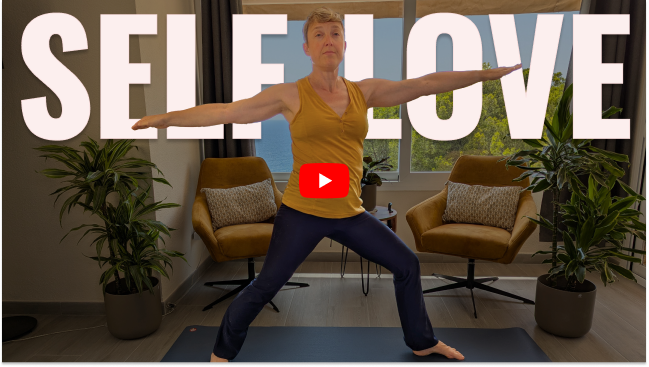
Have you been seeing messages about self-love and wondering how to integrate that, or even understand what it is, and how to balance self-love with loving others?
This is about understanding what healthy love is and learning to discern when you are engaging in activities that nurture both self-love and love of others. Many of us have had experiences where the love we feel in our heart is not reflected back to us.
When Love Feels Mismatched
Maybe you engaged with someone intending to help, and they responded with criticism or reacted in a way that surprised you. Maybe you feel uncomfortable with yourself and find yourself not exercising, or using a lot of alcohol at night to relax after a hard day. Maybe your inner critic is really loud.
All of these can indicate that somewhere along the lines of early experiences, you learned not to love a part of yourself.
What Self-Love Is
Self-love is the ability to accept and love all parts of yourself, even if some parts are unhelpful. It is also the ability to begin shifting behaviors that are not helpful toward behaviors that are more helpful.
What Your Body Needs To Feel Cared For
On an unconscious level, your body needs to feel cared for in order for you to feel loved. Your body needs physical movement. That includes exercise that is up-regulating and gets your heart rate up, and exercise that is down-regulating and supports stretching. A regular exercise program, preferably daily, tells your unconscious and your body that you love it.
Your body also feels loved depending on the food that nourishes it.
Food, Substances, And The Messages They Send
If you are eating foods that are highly processed, fried, or unhealthy, you are telling your body that you do not value it. Your body will have a hard time processing these foods, and it will not feel loved. The same is true with alcohol and substances such as sugar or drugs.
These are hard for your body to process. When you engage in these practices, they tell your body, and thereby your unconscious, that you do not value it and do not love it.
Boundaries, Needs, And People-Pleasing
Advocating for your needs and your boundaries when they come into conflict with someone else is another way to understand your relationship with self-love.
If you struggle to say, I know you would like to do X, Y, and Z, but I would like to do X, Y, and Z. Can we collaborate so both of our needs get met, you may be abandoning your own needs. This can look like people-pleasing, where you think, that person wants to do that, so maybe I should just do that because I have the capacity, without checking in to see what you want to do.
This can be something as simple as where you go to dinner. It can also be more complicated, like when someone engages in behavior that hurts you and, rather than advocating and saying, that behavior hurts me, you allow them to keep doing it.
Noticing Self-Abandonment Before You Create New Habits
Showing yourself love starts with noticing the ways you show yourself that you do not love yourself. You need to understand the ways you abandon yourself. Before creating new habits and engaging in self-love, acknowledge the parts of you that try to keep you safe, because that is why you drink, eat unhealthy food, or people-please.
There is often a wound from childhood that taught you it is safer to do that than to love yourself.
Compassion For Where You Are
I have deep compassion for where you are in your level of self-love. There is nothing wrong with you if you sometimes drink, binge drink, smoke marijuana, use heavier drugs, or eat unhealthy food. It is an indication that somewhere along the lines you learned not to love and accept parts of yourself.
Now you have protective parts trying to keep you safe through these activities.
For Those Wanting A Next Step
If you are interested in learning how to heal these parts of yourself, I hope you will consider reading my book, The Divine Within, Healing Ourselves to Heal the World, which is available on Amazon, Barnes & Noble, and other online platforms.
A Closing Blessing
I am sending you deep love and appreciation for where you are on your healing journey. Know that it is safe to be you, and it is safe to begin your healing journey.
About The Author
Allison Batty-Capps is a consciousness catalyst, spiritual teacher, and transmitter of Divine Human embodiment. She is a licensed mental health therapist, Reiki Master, Yoga Coach and spiritual channeler. She works at the intersection of psychology, mysticism, shadow alchemy, and God-consciousness, offering teachings that unify the human and the divine.
Her work is not about healing people — it is about awakening them.
Her presence carries a frequency that reminds others of their inherent sovereignty, their inner wisdom, and their direct connection to the Divine.
Through her books, teachings, sessions, and transmissions, Allison guides people into the maturity of spiritual adulthood — where compassion meets boundaries, love meets truth, and the soul meets the body.
She is devoted to helping humanity evolve beyond fear, beyond hierarchy, and beyond old paradigms of spirituality into a new era of embodied consciousness.
Allison lives what she teaches.
Her life reveals what unfolds when a person remembers they are not alone or separate, but a wave formed from the infinite ocean of God’s consciousness.
Join the Community!
Receive wellness tips, resources, book updates, and more directly in your inbox!
Related Posts
3D vs 5D Reimagined

Building a Trauma-Informed Spiritual Community
