Intergenerational Trauma
.png)
A Trauma-Informed, Compassionate Perspective on Healing Cycles of Harm
Many people sense that their struggles didn’t begin with them.
Patterns of anxiety, emotional reactivity, perfectionism, avoidance, difficulty with intimacy, or chronic self-doubt often feel older than our own lived experiences. From a trauma-informed perspective, this intuition is deeply accurate.
In this article, I want to explore intergenerational trauma—not from a place of blame or spiritual bypassing, but from a grounded, compassionate, and psychologically informed lens that honors both science and embodied spirituality.
My name is Allison Batty-Capps, author of The Divine Within: Healing Ourselves to Heal the World and founder of Blossoming Heart Wellness. The work I share integrates trauma recovery, neuroscience, attachment theory, and spirituality in a way that prioritizes nervous system safety, discernment, and agency.
Nothing here is meant to replace therapy, medical care, or your own inner knowing. I invite you to take what resonates and leave what does not. You are always the authority of your own experience.
What Is Intergenerational Trauma?
Intergenerational trauma refers to unresolved pain, stress, and survival adaptations passed from one generation to the next—biologically, emotionally, and psychologically.
This trauma does not pass because families are “bad” or because anyone failed morally. It passes because unhealed nervous systems shape caregiving, attachment, and emotional regulation, often without conscious awareness.
Intergenerational trauma may show up as:
- Chronic anxiety or depression
- Emotional reactivity or emotional numbness
- Difficulty with trust or intimacy
- Repeating relationship patterns
- Conflict without repair
- Hypervigilance, control, or people-pleasing
- Shame that feels inexplicable or inherited
These patterns are not character flaws.
They are survival strategies learned in systems that were not consistently safe.
The Biology of Trauma: Epigenetics and the Nervous System
Modern science now supports what many people have felt intuitively for generations.
Epigenetics shows us that trauma doesn’t only live in memory—it can influence how genes are expressed. Extreme stress, neglect, or trauma can alter how the nervous system responds to threat, and those changes can affect children even before birth.
This means:
- Sensitivity to danger can be inherited
- Stress responses may be heightened or blunted
- Emotional patterns can be passed through caregiving behaviors and physiology
This understanding is deeply liberating.
It tells us that mental health struggles are not personal failures or brain defects—they are adaptive responses to unsafe environments.
You are not broken.
Your nervous system learned how to survive.
Attachment Wounds and Early Relationships
Attachment theory helps us understand how early caregiving shapes our sense of safety and connection.
When caregivers are consistently responsive, a child develops secure attachment. The nervous system learns:
- “I am safe.”
- “My needs matter.”
- “Connection is reliable.”
When caregiving is inconsistent, unavailable, or frightening, the nervous system adapts. This can result in:
- Anxious attachment (hypervigilance, fear of abandonment)
- Avoidant attachment (emotional distance, self-reliance)
- Disorganized attachment (conflicting impulses of closeness and fear)
These attachment styles are not personality defects.
They are intelligent adaptations to early environments.
When Survival Strategies Are Mistaken for Personality
One of the most profound shifts in healing happens when we realize that many traits we identify as “who we are” are actually survival responses.
For example:
- Hypervigilance may look like anxiety or control
- Withdrawal may look like coldness or introversion
- Perfectionism may look like ambition
- Anger may look like aggression rather than protection
When these traits are seen as flaws, shame grows.
When they are seen as adaptations, compassion becomes possible.
This is where healing begins.
Healing Is About Breaking Cycles, Not Assigning Blame
Understanding intergenerational trauma is not about blaming parents, families, or cultures.
It is about restoring agency.
Healing occurs when we:
- Notice patterns in our nervous system and relationships
- Learn to regulate rather than react
- Reparent wounded parts with compassion and boundaries
- Integrate emotions that were once unsafe to feel
- Respond to present-day stress from awareness rather than survival
When one person heals, the cycle begins to shift.
This is how cycle breakers emerge—not because they are better, but because they are willing to feel, reflect, and choose differently.
Healing the Self Is How We Heal Systems
Many systems in the world are shaped by unhealed trauma—familial, cultural, religious, political.
True change does not come from spiritual transcendence or bypassing humanity.
It comes from embodiment.
When we heal:
- Shame transforms into self-compassion
- Boundaries become possible
- Consent is reclaimed
- Wisdom emerges naturally
- Intergenerational harm begins to lose momentum
Healing does not require more suffering.
Growth does not come from harm itself—it comes from safety, repair, and integration.
A Trauma-Informed Spiritual Perspective
Spirituality that encourages dissociation, suppression, or transcendence without embodiment can unintentionally retraumatize.
True spiritual growth:
- Honors the nervous system
- Encourages discernment
- Supports grounded integration
- Helps us inhabit reality more fully
Mystical experiences, symbolic dreams, and spiritual insights are deeply personal. They are best explored slowly, with grounding and trauma-informed support.
If spiritual language activates fear, urgency, or distress, that is a sign to pause—not push through.
Moving Forward With Compassion
If this article resonates, know that healing is possible—even when patterns feel deeply ingrained.
I share this work because it reflects my own journey of healing intergenerational trauma through the integration of psychology, neuroscience, and spirituality.
If you feel called, you can explore:
- Mentorship and online courses at
👉 www.blossomingheartwellness.com - My book: The Divine Within: Healing Ourselves to Heal the World, available on Amazon and online retailers
Thank you for honoring your nervous system, your humanity, and your capacity for healing.
When we heal ourselves, we don’t just change our own lives—we help shift the world.
About The Author
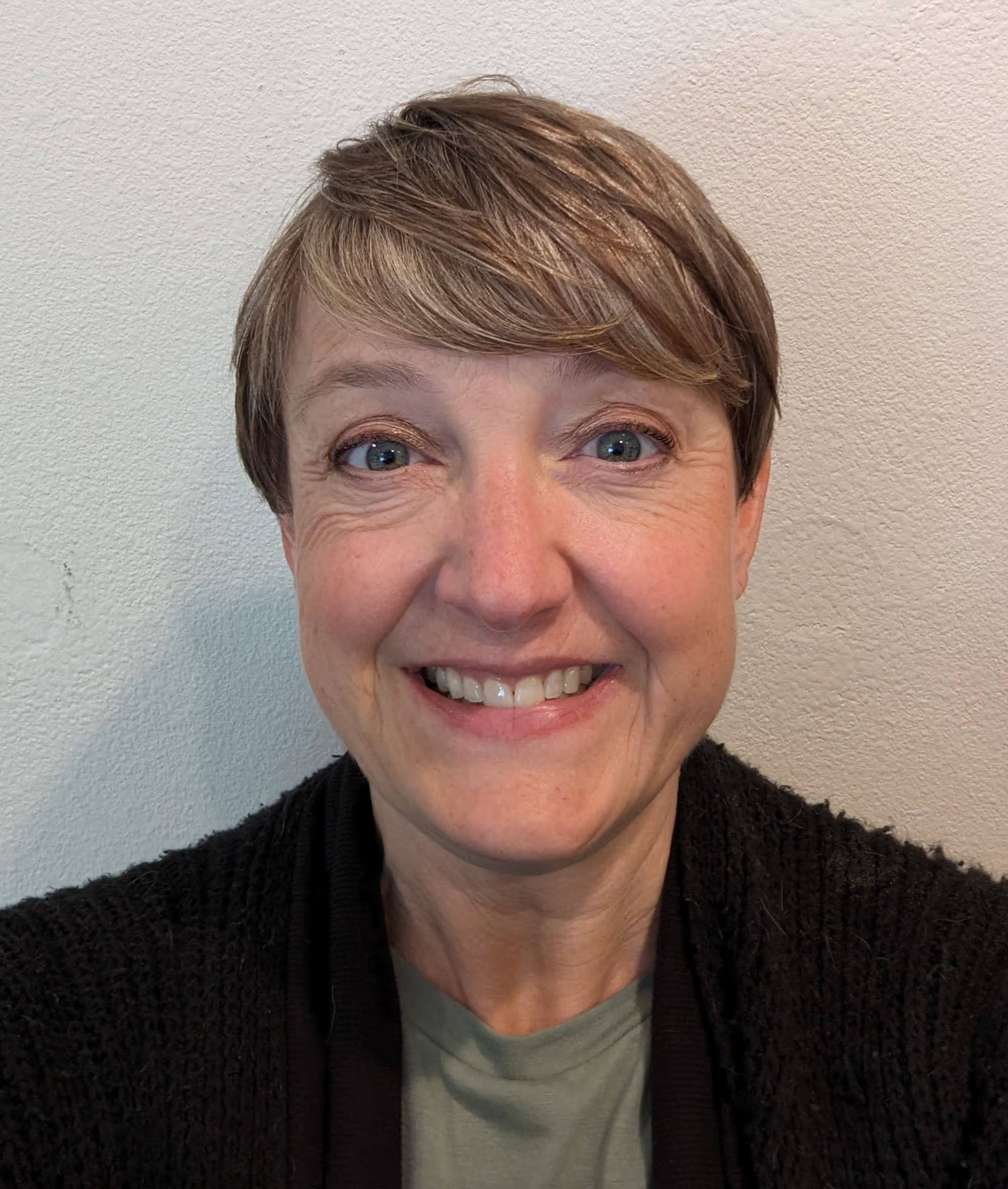
Allison Batty-Capps is a consciousness catalyst, spiritual teacher, and transmitter of Divine Human embodiment. She is a licensed mental health therapist, Reiki Master, Yoga Coach and spiritual channeler. She works at the intersection of psychology, mysticism, shadow alchemy, and God-consciousness, offering teachings that unify the human and the divine.
Her work is not about healing people — it is about awakening them.
Her presence carries a frequency that reminds others of their inherent sovereignty, their inner wisdom, and their direct connection to the Divine.
Through her books, teachings, sessions, and transmissions, Allison guides people into the maturity of spiritual adulthood — where compassion meets boundaries, love meets truth, and the soul meets the body.
She is devoted to helping humanity evolve beyond fear, beyond hierarchy, and beyond old paradigms of spirituality into a new era of embodied consciousness.
Allison lives what she teaches.
Her life reveals what unfolds when a person remembers they are not alone or separate, but a wave formed from the infinite ocean of God’s consciousness.
Join the Community!
Receive wellness tips, resources, book updates, and more directly in your inbox!
Related Posts
.jpg)
Why So Many Women Struggle to Trust Themselves

How do we measure spiritual maturity?
.jpg)