Healing Hate: How to Shine Light on Pain with Compassion and Boundaries
.png)
Across the world, we see people lashing out—blaming, fearing, or hating women, people of color, immigrants, LGBTQ+ individuals, or anyone who lives or loves differently than themselves. At first glance, hate seems like power, but beneath it lies something far more vulnerable: an unmet wound. Hate is pain that has forgotten its source, a part of the human experience that has not been held, processed, or healed.
Understanding this is not about excusing harmful behavior—it’s about seeing the truth so that we can respond in a way that creates transformation rather than perpetuating harm.
Hate is Pain, Not Power
When people lash out, they often do so from fear, shame, grief, or unresolved childhood wounds. Hate is rarely conscious; it is pain masquerading as strength. Every act of oppression, every act of cruelty, ultimately harms the person acting out as much as it harms the target.
Beneath hate is a universal human cry: “See my pain. See my fear. See the part of me that has not been loved.” Recognizing this allows us to respond from compassion without condoning harmful behavior.
Compassion Without Excusing Harm
Compassion does not mean weakness. It does not mean staying silent or enabling harmful behavior. Compassion means seeing the truth beneath the behavior, responding consciously, and holding loving boundaries.
When we respond with clarity, we can say:
- “This belief is harmful.”
- “These words create fear and division.”
- “This behavior devalues human dignity.”
We separate the behavior from the person’s worth. Every soul retains its divinity, even when expressing hate. By doing this, we create conditions for healing instead of escalating conflict.
Boundaries: Love in Action
Boundaries are not rejection—they are love in its most honest form. They protect the dignity of all involved, including the person causing harm. Saying things like:
- “I will not participate in harmful conversations.”
- “I will protect those being targeted.”
…is not punitive. It is a way to hold others accountable while maintaining compassion. Boundaries allow us to engage from a place of love rather than fear, anger, or reactivity.
Seeing the Wound Beneath Hate
When we shine a light on hate, we recognize that it stems from unhealed pain. People hate because they were not loved fully, because they were taught to fear difference, or because parts of themselves—softness, vulnerability, empathy—were suppressed.
Healing begins inward. By acknowledging and tending to our own unhealed parts, we can create a ripple effect of awareness, compassion, and love. Only by healing ourselves can we truly help others reconnect with their own divinity.
Taking Responsibility for Healing
Healing ourselves is an active choice. It requires courage, self-awareness, and ongoing inner work. By doing this, we equip ourselves to respond to hate with truth, boundaries, and love. We offer a doorway back into humanity, not a battlefield.
My book, The Divine Within: Healing Ourselves to Heal the World, provides step-by-step guidance to reconnect with your inner divinity, cultivate self-awareness, and develop the tools to heal both yourself and the world around you. Together, we can create a world where love, not fear, guides our actions.
Conclusion: Love is the Answer
Hate is pain that has forgotten itself. Compassion sees that pain and responds with love, clarity, and boundaries. Accountability and healing go hand-in-hand, and by embodying these principles, we not only heal ourselves but help others remember their inherent divinity. The world begins to heal when we dare to respond from love rather than fear.
About The Author
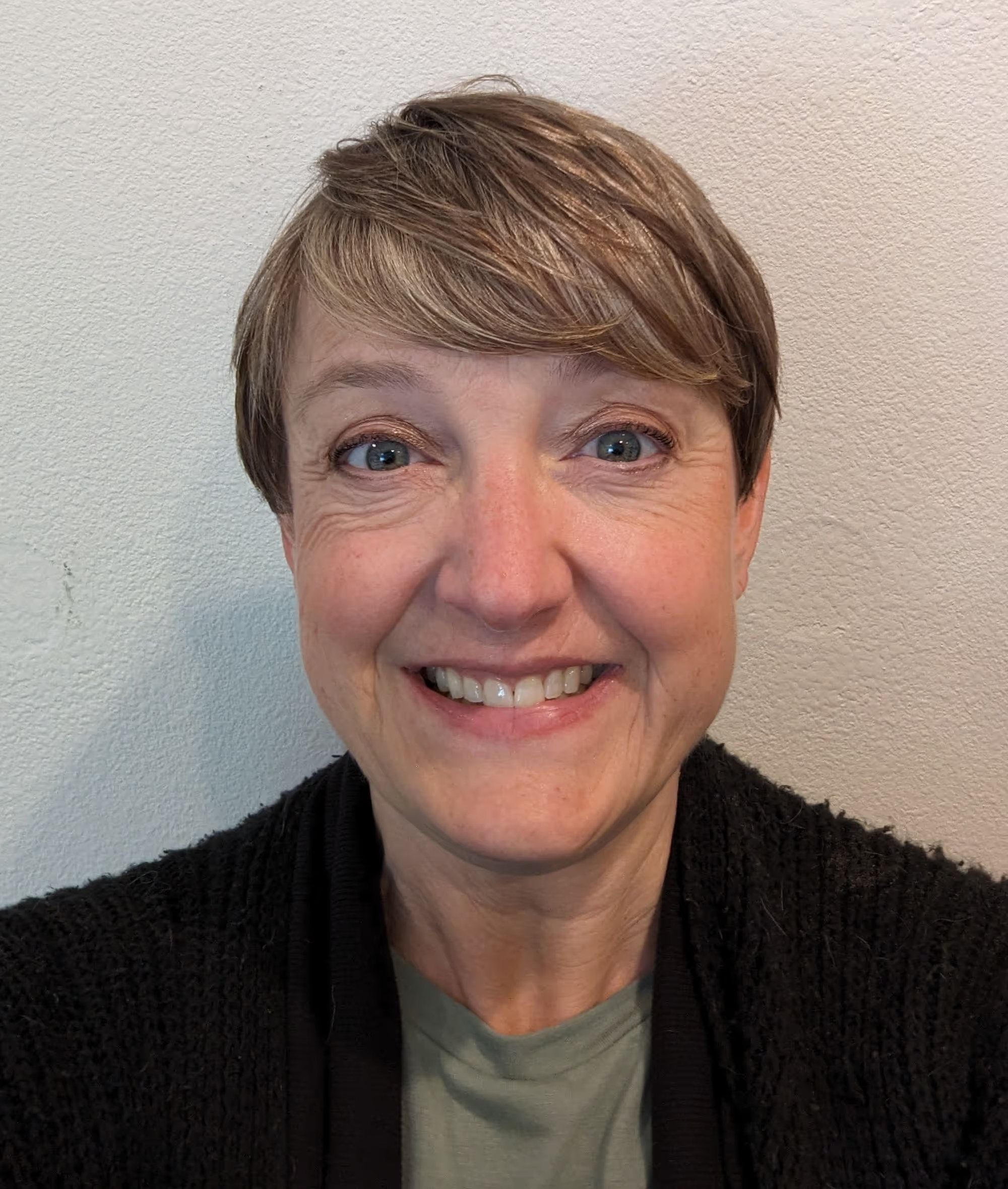
Allison Batty-Capps is a consciousness catalyst, spiritual teacher, and transmitter of Divine Human embodiment. She is a licensed mental health therapist, Reiki Master, Yoga Coach and spiritual channeler. She works at the intersection of psychology, mysticism, shadow alchemy, and God-consciousness, offering teachings that unify the human and the divine.
Her work is not about healing people — it is about awakening them.
Her presence carries a frequency that reminds others of their inherent sovereignty, their inner wisdom, and their direct connection to the Divine.
Through her books, teachings, sessions, and transmissions, Allison guides people into the maturity of spiritual adulthood — where compassion meets boundaries, love meets truth, and the soul meets the body.
She is devoted to helping humanity evolve beyond fear, beyond hierarchy, and beyond old paradigms of spirituality into a new era of embodied consciousness.
Allison lives what she teaches.
Her life reveals what unfolds when a person remembers they are not alone or separate, but a wave formed from the infinite ocean of God’s consciousness.
Join the Community!
Receive wellness tips, resources, book updates, and more directly in your inbox!
Related Posts

If You Love Your Work, Why Would You Ever Want to Stop?
.jpg)
The Harmful Myth of “Poor Mindset”