From Reactivity to Response
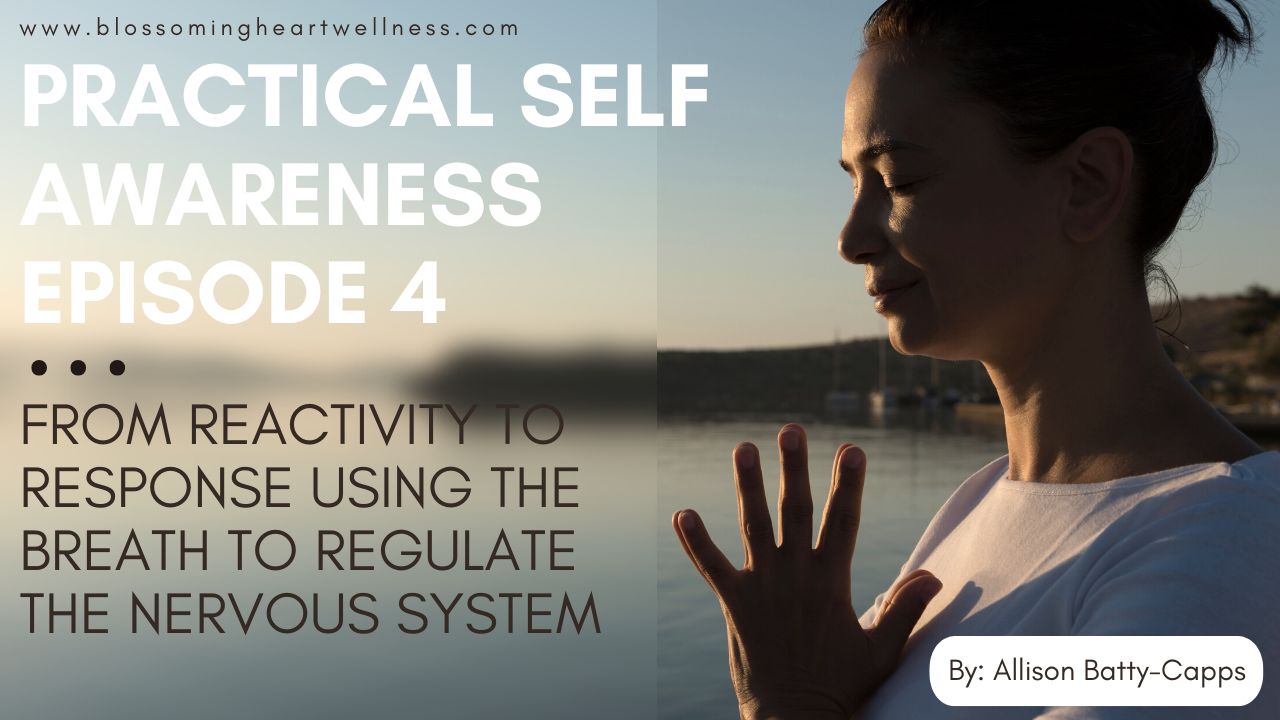
There are moments in life when we find ourselves reacting faster than we intended.
A conversation escalates.
A tone shifts.
A message lands in a way we didn’t expect.
A memory gets triggered that feels bigger than the present moment.
And suddenly, we are no longer responding from clarity.
We are reacting.
In those moments, something very important is happening—not psychologically “wrong,” but biologically intelligent.
Your nervous system is trying to protect you.
Reactivity Is Not a Failure—It Is a Nervous System Response
When we experience emotional activation—whether through fear, anger, overwhelm, or even deep sadness—the body automatically shifts into survival mode.
This is the sympathetic nervous system at work.
It prepares the body to:
- Fight
- Flee
- Freeze
This response is ancient, fast, and protective. It exists to keep you safe.
But here is what often gets misunderstood:
Reactivity is not a personality flaw. It is physiology.
It is your body responding to perceived threat—whether that threat is immediate or rooted in past emotional experience.
When activation lingers, however, we can become stuck in patterns of:
- Emotional overwhelm
- Defensive reactions
- Shutdown or numbness
- Difficulty accessing clarity or compassion
And from this place, it becomes harder to feel grounded, present, or connected to ourselves and others.
Why We Lose Access to Clarity in Activation
From a neuroscience perspective, something very important happens during emotional stress.
The brain prioritizes survival over reflection.
- The amygdala becomes highly active and scans for threat
- The prefrontal cortex, responsible for reasoning, perspective, and emotional regulation, becomes less accessible
- The body shifts into a state of urgency or protection
This is why, in moments of activation, we often say or do things we later reflect on and think:
“That wasn’t how I wanted to respond.”
But in that moment, your nervous system was not trying to be rational—it was trying to be safe.
The Bridge Back: Your Breath
One of the most powerful ways to move from reactivity to response is something you carry with you at all times:
your breath.
Breath is not just a physical process—it is a direct communication pathway between your body and nervous system.
When you bring awareness to the breath, especially with slow, intentional rhythm, something remarkable happens:
- The parasympathetic nervous system activates
- Heart rate begins to slow
- The body receives signals of safety
- Emotional intensity begins to soften
In simple terms:
The breath tells the body: “You are safe enough to come back.”
Inner Compass: Returning to Heart-Centered Awareness
In this work, I often refer to what I call the inner compass—your heart-centered awareness.
This is the part of you that is not caught in reaction, fear, or urgency.
It is the part that can observe, pause, and respond with presence.
Each conscious breath becomes a bridge back to this inner space.
A return from:
- Reactivity → to awareness
- Overwhelm → to grounding
- Survival → to presence
The 4–6 Breath: A Simple Nervous System Reset
One of the most accessible ways to regulate the nervous system is through a simple breathing rhythm:
Inhale for 4 counts
Exhale for 6 counts
This pattern is powerful because:
- The longer exhale activates the parasympathetic nervous system
- It signals the body that danger is not immediate
- It helps interrupt cycles of reactivity
This is not about forcing calm.
It is about inviting safety back into the body.
A Heart-Centered Breath Practice
You can use this practice anytime during your day—especially when you notice emotional activation.
1. Pause
When you feel triggered or overwhelmed, pause if possible.
Place a hand on your heart.
Feel your feet on the ground.
Simply acknowledge:
“Something in me is activated right now.”
No judgment. No fixing. Just awareness.
2. Breathe
Begin a slow rhythm:
- Inhale through your nose for 4 counts
- Exhale through your mouth for 6 counts
As you breathe, allow your shoulders to soften.
Let your body know it does not need to hold tension to stay safe.
3. Return
With each exhale, imagine sending a message inward:
“I return to my heart.”
This is not a metaphorical idea—it is a somatic shift.
You are teaching your body that it can come back to presence even after activation.
Why Visualization Matters
One of the most powerful aspects of this practice is mental rehearsal.
When you imagine yourself using this breath in future triggering moments, your brain begins to build a new neural pathway.
This is called neuroplasticity—the brain’s ability to reorganize through repeated experience and awareness.
So when the real moment arrives, your system is more likely to remember:
Pause. Breathe. Return.
What You Are Really Learning
This practice is not just about calming down.
It is about changing your relationship to activation itself.
You are learning that:
- You do not need to abandon yourself when you feel overwhelmed
- You can pause before reacting
- You can return to clarity even in emotional intensity
- Safety can be built internally, not just externally
Over time, something profound begins to shift.
You are no longer only reacting to life.
You are learning how to respond from awareness.
Reflection for Integration
After practicing, you may find it helpful to reflect:
- What emotions most often pull me into reactivity?
- How does my breath change when I feel safe versus overwhelmed?
- What would change in my life if I could pause before reacting?
These reflections help reinforce new neural pathways and deepen embodied awareness.
A Closing Reminder
Every moment of activation is also a moment of potential return.
Not because you must get it right.
But because your nervous system is always capable of learning something new when it is met with enough presence, repetition, and compassion.
Each breath is a doorway back.
Each pause is a return.
Each return is a form of healing.
You are not trying to become someone who never reacts.
You are learning how to become someone who can come back to themselves.
And that changes everything.
To go deeper read The Divine Within: Healing Ourselves to Heal the World or visit www.blossomingheartwellness.com for online courses and mentorship
About The Author
Allison Batty-Capps is a consciousness catalyst, spiritual teacher, and transmitter of Divine Human embodiment. She is a licensed mental health therapist, Reiki Master, Yoga Coach and spiritual channeler. She works at the intersection of psychology, mysticism, shadow alchemy, and God-consciousness, offering teachings that unify the human and the divine.
Her work is not about healing people — it is about awakening them.
Her presence carries a frequency that reminds others of their inherent sovereignty, their inner wisdom, and their direct connection to the Divine.
Through her books, teachings, sessions, and transmissions, Allison guides people into the maturity of spiritual adulthood — where compassion meets boundaries, love meets truth, and the soul meets the body.
She is devoted to helping humanity evolve beyond fear, beyond hierarchy, and beyond old paradigms of spirituality into a new era of embodied consciousness.
Allison lives what she teaches.
Her life reveals what unfolds when a person remembers they are not alone or separate, but a wave formed from the infinite ocean of God’s consciousness.

Join the Community!
Receive wellness tips, resources, book updates, and more directly in your inbox!
Related Posts
.png)
What If Our Political Divisions Reflect Our Unhealed Relationship Patterns?
When the Body Remembers
.png)